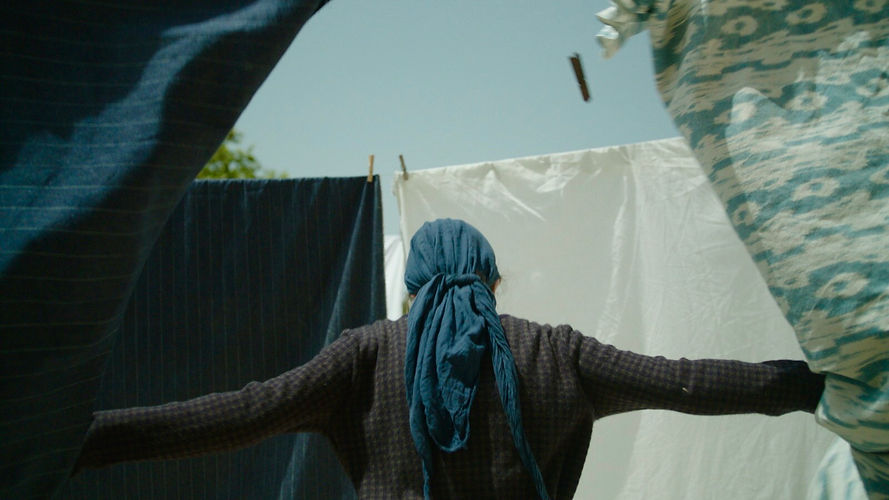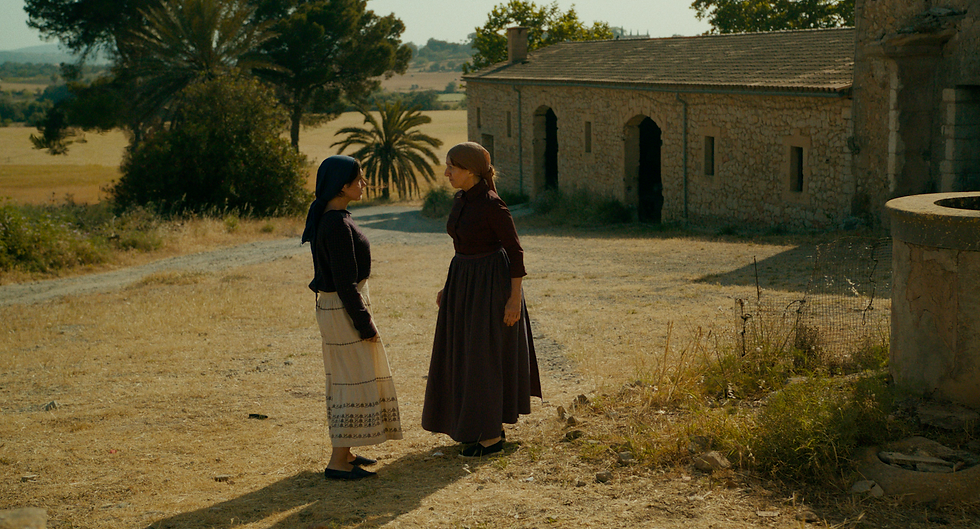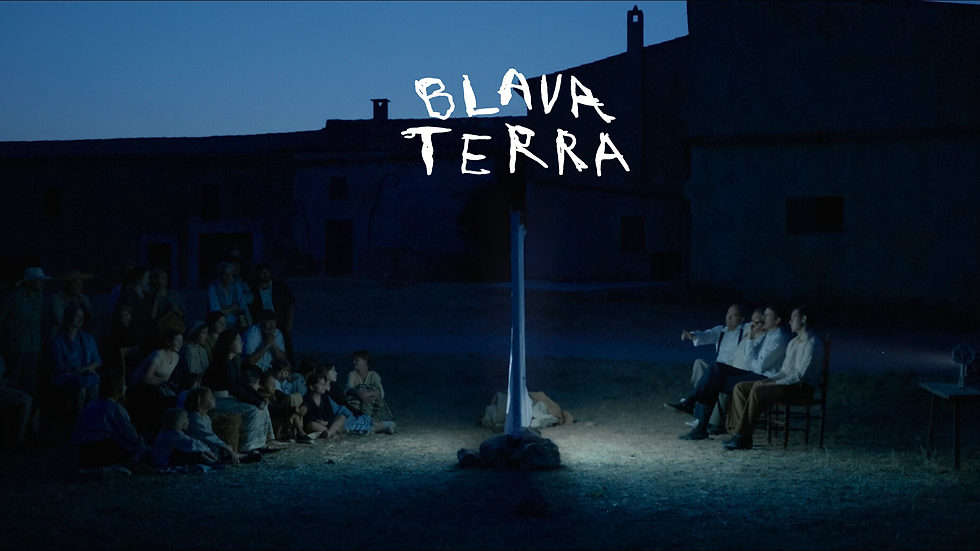
Blava Terra (Blue Land) is a short film produced by ESCAC Films and directed by Marine Auclair March.
Since its premiere, Blava Terra has built an impressive journey through prestigious national and international film festivals, being selected in events focused on auteur cinema and emerging filmmakers; it premiered at BCN Film Fest, screened at 90 festivals, won 30 awards, and received Gaudí and Fugaz nominations.
It is currently available on the FILMIN and 3CAT platforms:
-FILMIN: https://www.filmin.es/corto/blava-terra?origin=searcher&origin-query=primary
-3CAT: https://www.3cat.cat/3cat/blava-terra/video/6329848/
SYNOPSIS
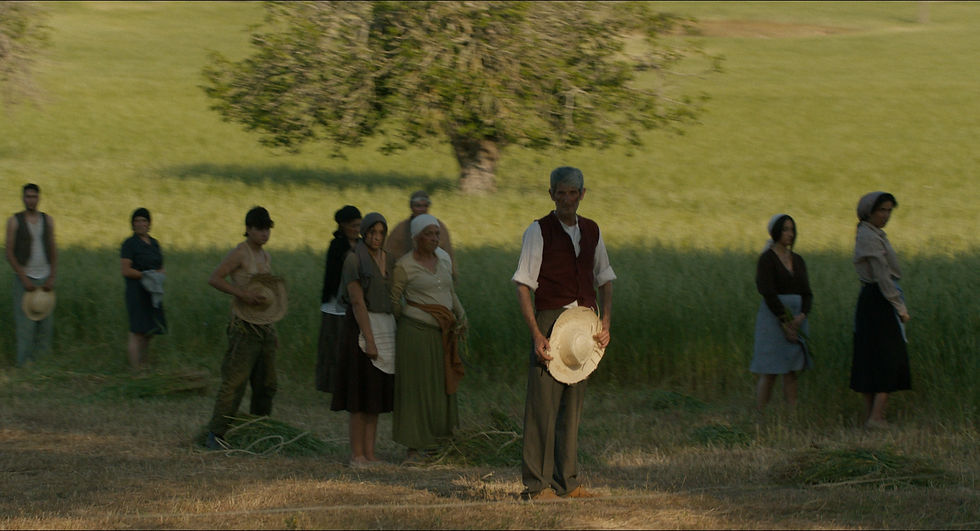
Mallorca, 1940.
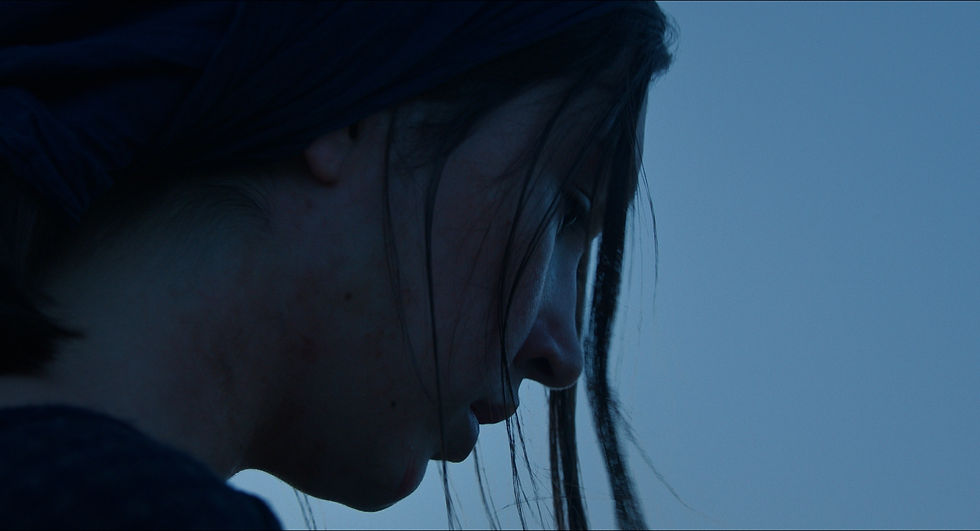
Elionor discovers the intricacies of adulthood in 1940’s Mallorca.
She lives in a remote farmhouse, from which the inhabitants have never ventured out.
Everything will change with the arrival of a movie.


DIRECTOR'S STATEMENT
One day, I found an abandoned book at the back of a room, in which it read:
A French tourist was walking through a field when he came across an old Mallorcan farmer. The farmer explained that, since childhood, he had carried a doubt in his mind and, hopeful, trusted that the young Frenchman might be able to answer it:
"You, who come from elsewhere, could you tell me if the rest of the world is bigger or smaller than Mallorca?"
— Dear Mallorcans (Guy de Forestier, 1995)
Blava Terra was born from a question that seemed to me as poetic as it was unsettling: how is it possible to live on an island without knowing the sea?
Less than a hundred years ago, many people in Mallorca were born and died without ever leaving the estate where they worked. The horizon ended at the boundaries of the property. The land defined their worldview, their bodies, and their destiny. There was no concept of “beyond.” The world was only what could be walked upon. It is therefore unsurprising that some people had never even conceived of the sea, let alone seen it: that vast blue expanse which, according to those fortunate enough to behold it, could appear like a field of water impossible to plow.
To this physical enclosure were added other, more invisible forms of violence: extreme classism, cultural isolation, and, above all, the lack of freedom for women. At the onset of menstruation, girls ceased to be children and became property; their bodies were subjected to abuse and the rules imposed by the landowner. Imagining another life was not only improbable—it was dangerous.
In that context, the arrival of cinema seemed almost revolutionary. A film was not merely entertainment: it was a crack in the walls. A window onto other landscapes, other bodies, other possibilities of existence. Yet even those images were controlled by those in power, who decided which stories the people were allowed to dream.
I was interested in telling the story of someone capable of looking at those images differently. Our protagonist is the only one who recognizes in the screen a promise of escape, an intuition of freedom. For her, seeing becomes an act of resistance.
With Blava Terra, I wanted to work with landscape and silence as physical limits, and cinema within cinema as a means of opening. The film speaks of that fragile moment in which imagination can save your life.